
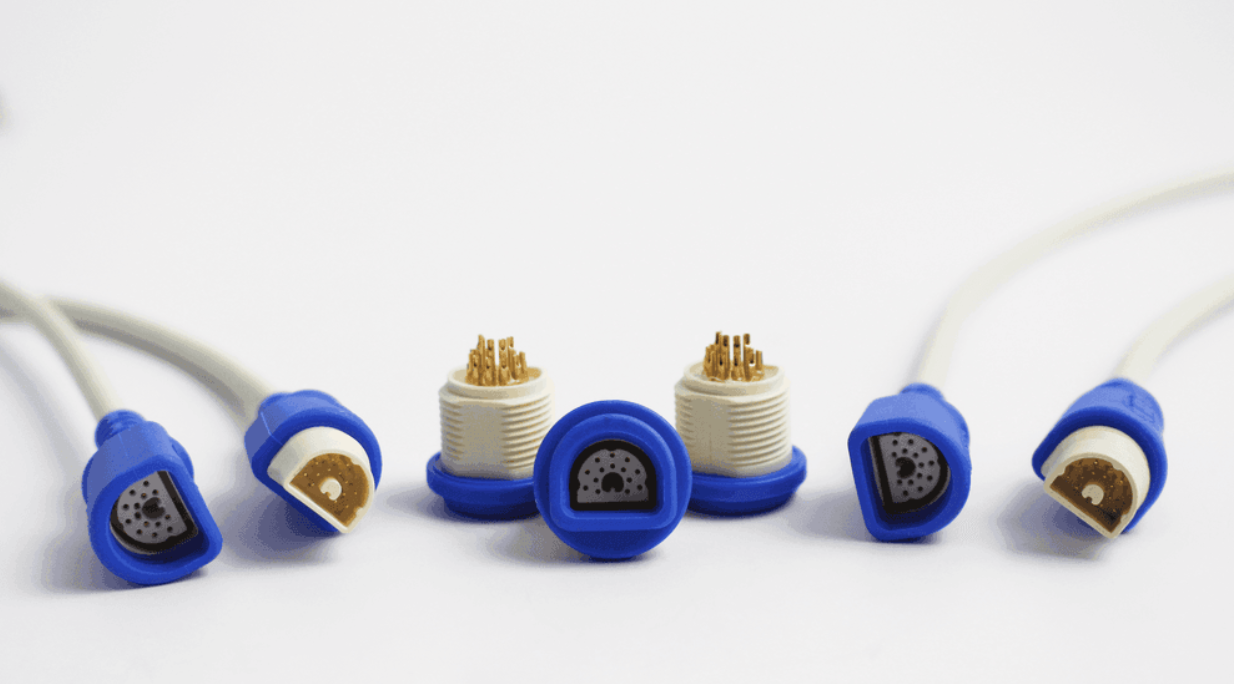
What Is Over-Molding?
Over-molding is a process in which a molded plastic material is applied over a pre-assembled cable, wire harness, or connector interface. The molded material encapsulates critical junctions, creating a single integrated component rather than multiple mechanically fastened parts.
From an engineering perspective, over-molding is not purely cosmetic—it is a functional enhancement that directly impacts mechanical integrity, environmental resistance, and long-term performance.
Key Benefits of Over-Molding in Cable Assemblies
1. Improved Strain Relief
Cable failures often occur at termination points due to repeated bending, vibration, or mechanical stress. Over-molding distributes stress more evenly across the cable-to-connector interface, significantly reducing the risk of conductor fatigue or pull-out.
2. Environmental Protection
Over-molded assemblies provide enhanced protection against moisture, dust, chemicals, and contaminants. This makes them well suited for applications where sealing and ingress protection are required.
3. Enhanced Mechanical Durability
The molded encapsulation reinforces connectors and junctions, increasing resistance to shock, vibration, and handling damage—critical for aerospace, defense, medical, and industrial applications.
4. Design Integration and Consistency
Over-molding allows engineers to integrate multiple functions into a single molded form, such as cable exits, bend control, labeling features, or ergonomic grips. The result is a more consistent and repeatable assembly compared to multi-part mechanical solutions.
Common Applications of Over-Molded Cable Assemblies
Over-molding is widely used across industries that demand high reliability and controlled performance, including:
Aerospace & Defense: Vibration resistance, environmental sealing, and long service life
Medical Devices: Clean, durable interfaces for sensitive and regulated equipment
Industrial & Automation: Protection in harsh operating environments
Telecommunications: Mechanical stability and long-term signal reliability
Mission-Critical Electronics: Where failure is not an option
Engineering Design Considerations
When specifying over-molding for a cable assembly, several design factors should be evaluated early in the development process:
Material Selection
The choice of over-mold material affects flexibility, durability, temperature resistance, and chemical compatibility. Material selection should align with application requirements and operating conditions.
Mold Design and Geometry
Proper mold design ensures uniform material flow, consistent wall thickness, and effective strain relief. Geometry must also account for cable bend radius and connector interface constraints.
Process Control and Repeatability
Over-molding is most effective when integrated into a controlled manufacturing environment. Consistent tooling, validated processes, and documented procedures are essential for repeatable results.
Compliance and Quality Requirements
For regulated industries, over-molded assemblies must be produced under compliant quality systems, with full documentation and traceability.
TRS Over-Molding Capability
With the addition of over-molding capabilities in 2025, TRS now offers a fully integrated solution for cable assemblies and wire harnesses, from initial design support through production. Our over-molding processes are executed under IPC/AS/ISO-compliant quality systems, ensuring consistency, traceability, and performance reliability.
By bringing over-molding in-house, TRS enables closer collaboration with engineering teams, reduced lead times, and improved manufacturability for both prototype and production programs.
Conclusion
Over-molding is a critical process for enhancing the performance and durability of modern cable assemblies. When properly designed and manufactured, it provides measurable benefits in strain relief, environmental protection, and mechanical integrity.
As applications continue to demand higher reliability and tighter integration, over-molding remains an essential consideration for engineers designing cable assemblies for mission-critical environments.